
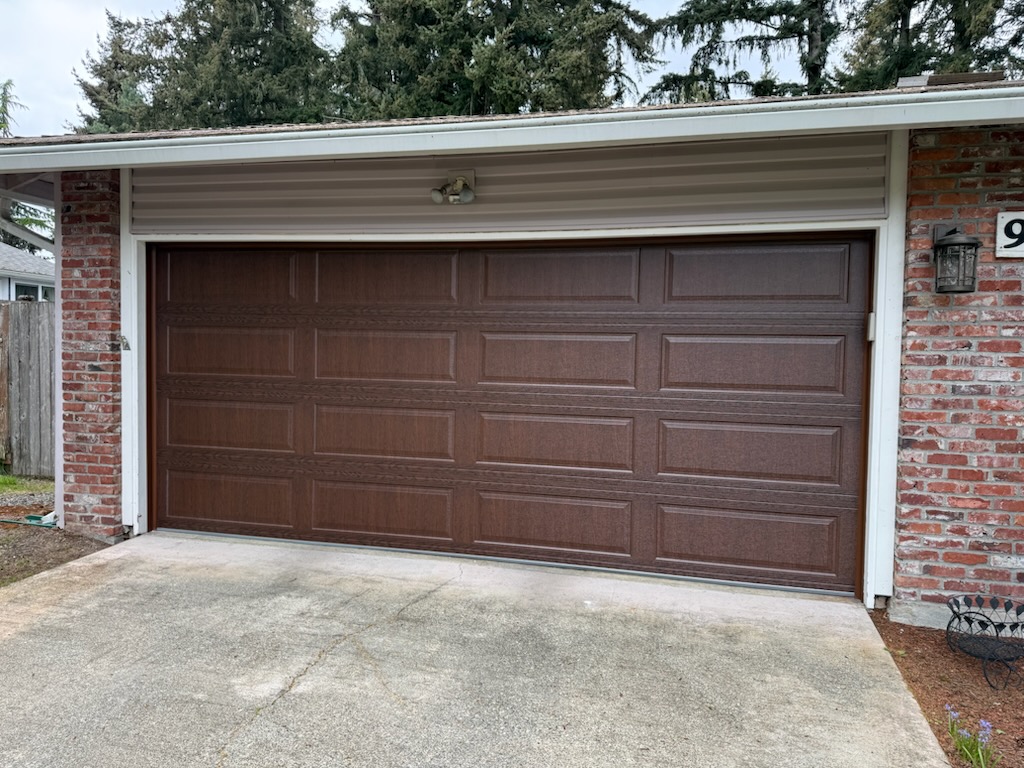
For Pierce County residents, checking the R-value and U-factor of insulated garage doors means evaluating how well your system blocks summer heat transfer, proving garage door insulation isn’t only for freezing winters. This assessment ensures your home remains cool during intense July heatwaves.
Is your garage secretly acting as a massive oven that’s driving up your home cooling costs every single summer? While many homeowners think garage door insulation is only for freezing winters, intense July heatwaves present an entirely different challenge for houses across Pierce County.
When the summer sun beats down on an uninsulated or poorly rated garage door, the temperature inside that space can easily soar twenty degrees past the outside air temperature. This thermal energy doesn’t just stay trapped in your garage; it actively migrates into your living spaces, forcing your air conditioner to work twice as hard.
Understanding how your garage door handles heat transfer can change how you maintain comfort and energy efficiency throughout the warmest months of the year.
Table of Contents
Why Does July Heat Overwhelm Standard Garage Doors?
When summer temperatures spike, a phenomenon known as thermal bridging occurs in garage doors that lack proper structural engineering. Thermal bridging happens when heat finds the path of least resistance through conductive materials, such as thin steel or aluminum door panels. As the exterior surface absorbs the sun’s radiant energy, that heat transfers directly to the interior side of the door, radiating warmth straight into your home.
This process transforms your garage into a thermal battery that constantly bleeds heat through adjacent walls and ceilings into your air-conditioned living areas. If you have an attached garage with a bedroom directly above it, you’ve likely noticed that the room stays significantly warmer on July afternoons. The culprit is almost always this continuous influx of heat energy from below. Managing this thermal transition requires a door that breaks the conduction cycle before heat enters your property.
What Do R-Value and U-Factor Actually Mean in the Summer?
To accurately measure how well insulated garage doors resist this intense seasonal heat, the Door & Access Systems Manufacturers Association (DASMA) relies on two critical metrics: R-value and U-factor. While these terms might sound like complicated industry jargon, they are simple measurements of thermal performance.
R-value measures a material’s thermal resistance, meaning its ability to stop heat from flowing through it. A higher number indicates better performance, which keeps summer heat outside where it belongs.
Conversely, the U-factor measures the rate of heat transfer through a complete door assembly, including the panels, tracks, and hardware windows. In this case, a lower number means the product is superior at preventing heat infiltration.
During a heatwave, a door with excellent specifications acts as a shield, ensuring the ambient external temperature doesn’t dictate the climate inside your garage structure.
| Thermal Metric | Focus of Measurement | Ideal Summer Rating |
| R-Value | Resistance of insulation material to heat flow | Higher values (R-12 to R-18+) |
| U-Factor | Heat transfer rate of the entire door assembly | Lower values (0.20 or less) |
How Do You Find the Best Garage Door R-Value for Summer Efficiency?
Choosing the best garage door R value depends heavily on your specific home layout and how you use your garage space. For detached garages used strictly for vehicle storage, a lower rating might suffice, but attached garages demand far greater thermal resistance. Polyurethane insulation typically offers the highest performance per inch, filling the entire core of the door to eliminate air pockets where heat can gather.
When evaluating new options, you should look for doors that carry certified DASMA ratings rather than manufacturer estimations. High-quality insulated garage doors feature a multi-layer construction that places thick insulation between heavy-duty steel skins, effectively neutralizing the threat of thermal bridging. Investing in proper thermal resistance pays dividends throughout the year by stabilizing your home’s overall microclimate.
How Can You Perform a DIY Check for Garage Door Weatherstripping Degradation?
Summer UV rays are incredibly harsh on the rubber and vinyl components that seal your garage door against the elements. Over time, intense sunlight dries out these seals, causing them to crack, shrink, and crumble away silently. When this happens, hot air blows freely around the perimeter of your door, completely bypassing any insulation benefits your panels provide.
To determine if you need a garage door weatherstripping replacement, you can perform a quick visual and physical inspection:
- Look for visible gaps of daylight around the top and sides of the door from inside the garage while it is closed
- Feel along the bottom seal for brittle sections, cracks, or areas that have flattened out and lost their flexibility
If you spot these signs, replacing those seals immediately will block hot drafts from cooking your garage interior.

Why Do Modern Insulated Garage Doors Save Money on Cooling?
Upgrading to premium insulated garage doors does more than just keep your garage comfortable; it directly protects your household budget. When you minimize the amount of heat energy entering your home through the garage, your HVAC system can complete its cycles efficiently without running continuously. This reduction in operational strain extends the lifespan of your cooling equipment while lowering your monthly utility bills.
Modern door systems also use advanced thermal breaks, which are non-conductive materials placed between the interior and exterior steel skins. This design feature ensures that even if the outside of the door becomes hot enough to cook an egg, the interior skin remains cool to the touch. The result is a stable, controlled environment that keeps your entire home more comfortable during extreme weather events.
How Does Lakeside Doors Resolve Your Summer Efficiency Struggles With Insulated Garage Doors?
Navigating the complexities of thermal metrics and structural installation requires a trusted partner with localized expertise. Lakeside Doors provides top-tier solutions engineered to withstand the unique climate demands faced by homeowners throughout Pierce County. Our experienced team evaluates your current setup to identify exactly where your thermal defenses are failing during the hot summer months.
As a premier garage door installation company, we offer an extensive selection of high-performance doors boasting exceptional R-values and durable construction. We handle everything from precise panel alignment to comprehensive garage door weatherstripping replacement using premium, UV-resistant materials.
Partnering with our team guarantees your home stays fully protected against both summer heatwaves and freezing winter storms.
Securing your home against extreme seasonal temperatures starts with an evaluation of your garage entry system. Contact us today to schedule your professional thermal inspection and explore our energy-efficient product lines.