
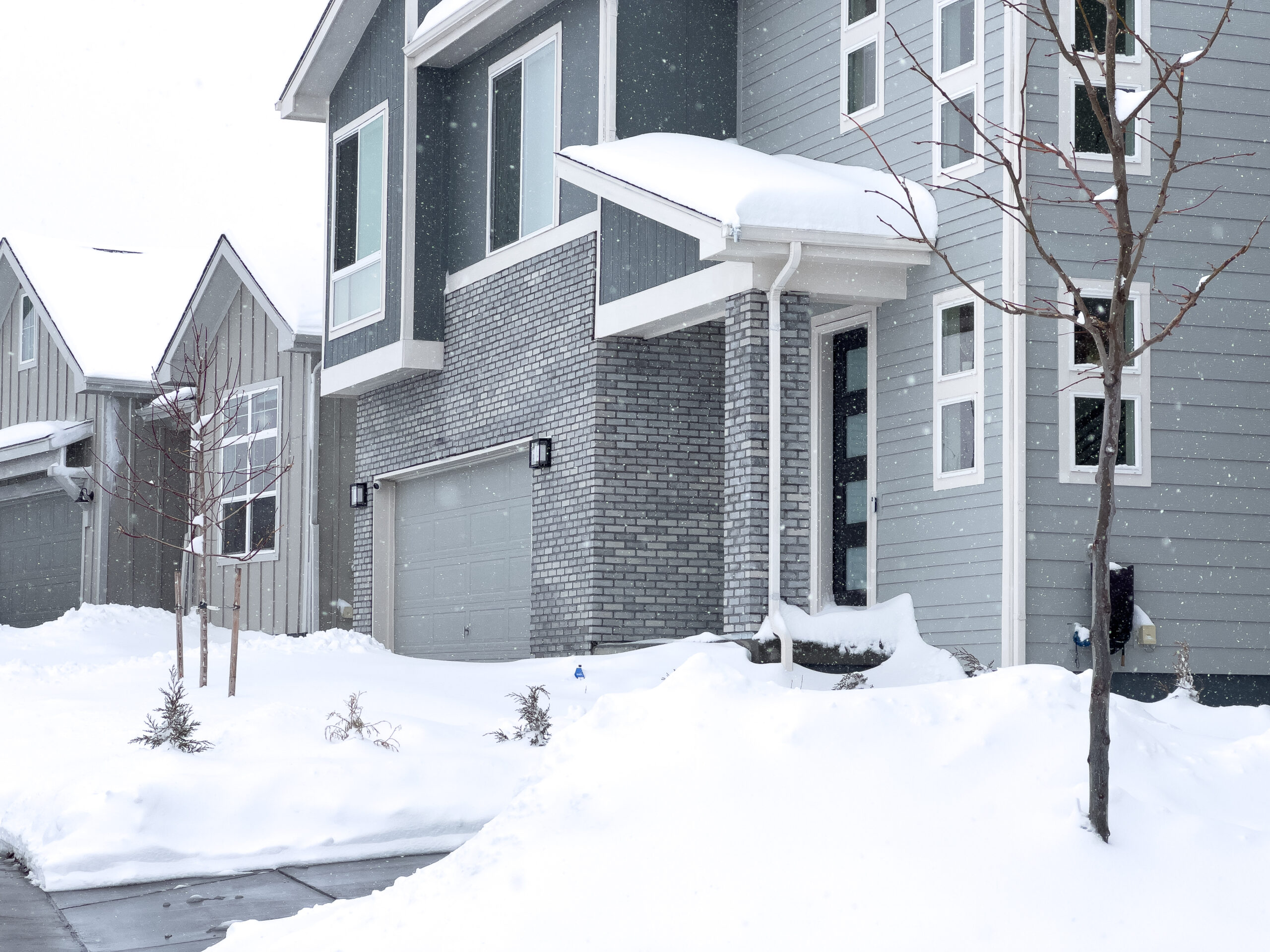
What if your windows aren’t to blame for cold filling up your home this winter? With the way Pierce County winters bring cold rain, slush, and long stretches of freezing temperatures, the wrong garage door could actually be the reason for daily battles with cold at home.
Every year, homeowners ask why their door sticks, swells, leaks, or freezes to the ground. The truth is simple: some garage doors are built for mild climates, not the Pacific Northwest (PNW) winters.
Below are the five worst garage doors for winter in WA, why they struggle, and what you can do to stay warm, protected, and worry-free.
Table of Contents
1. Lighter Gauge Steel Garage Doors
Lighter-gauge steel single-layer doors work fine in mild weather, but the moment our PNW winter sets in, it’s a different story. Their lightweight construction provides little resistance to wind, moisture, and freezing rain. When temperatures drop, these doors flex more than insulated steel models, which leads to misalignment. Not to mention noisy operation and difficulty opening.
But moisture is the bigger threat. Thin steel absorbs cold quickly, creating condensation that turns into frost. That frost spreads across hinges, tracks, and bottom weatherstripping, creating the perfect setup for garage doors prone to freezing. Once the bottom seal freezes to the concrete, homeowners feel stuck, literally.
The fix comes down to better insulation and upgraded materials. A winter-proof garage door upgrade using multi-layer steel with polyurethane insulation performs far better than thin steel in our climate. It helps keep temperatures consistent inside the garage and keeps frost from gaining ground.
2. Non-Insulated Wood Garage Doors
We love the character a good wood garage door has. But non-insulated wood is no match for Pierce County winters.
Wood expands as moisture rises, then contracts when temperatures drop. The result? Warping, swelling, sticking, and gaps around the frame. Once those gaps show up, cold air leaks in, and the door struggles to seal.
In wet conditions, untreated or lightly treated wood pulls in moisture like a sponge. That water can freeze inside the fibers of the wood, leading to cracking, splitting, and heavy sagging as the winter weeks go on. These problems become especially noticeable if you’re in a neighborhood surrounded by tree cover, where moisture hangs in the air all season long.
Homeowners are usually surprised by how quickly wooden panels can deteriorate in winter. Sometimes the solution is careful repair and sealing; other times, replacing the garage door with insulated steel or composite is the smarter, long-term choice.
Either way, the goal is to pick a door that won’t warp the moment winter arrives.
3. Older Aluminum Garage Doors
Aluminum garage doors built years ago don’t have the structural and thermal features seen in today’s upgraded aluminum models.
Older aluminum panels dent easily. And that’s something PNW windstorms love to exploit. On cold mornings, the metal becomes more brittle and loses strength, which is why older doors rattle loudly during freezing rain or sudden wind.
Aluminum also transfers cold very quickly. Without insulation, these doors let winter seep directly into the garage. If you use your garage as a workshop, gym, or storage space, this leads to icy floors, damp air, and a room that feels more like an outdoor shed than part of your home.
Upgrading to insulated steel or newer aluminum with thermal breaks gives you a garage door that lasts decades, not seasons.
4. Cheap Composite Panel Doors
Composite garage doors are actually okay. But if it’s a low-quality version, get ready for it to buckle and deteriorate under PNW winter conditions.
Cheap composite panels absorb moisture from rain and melting snow. This leads to swelling and soft spots. When the water inside those panels freezes, the outer layers separate or flake away.
Many budget composite doors also come with poor hardware and flimsy framing. In freezing weather, that hardware becomes stiff, squeaks loudly, and eventually breaks under shifting weight. These weak points make composite one of the worst garage doors for winter in WA when the materials aren’t built for year-round moisture.
When customers come to Lakeside Doors with composite panel problems, our long-term fix is replacing the door with a stronger, insulated model that resists water intrusion. Composite can still be a great option, but only when it’s built with durable cores and high-quality skins that stand up to the seasons.
5. Poorly Sealed or Poorly Installed Garage Doors
This final category includes every door that should work fine but doesn’t because the installation or sealing wasn’t done correctly. Even a premium insulated door will struggle without proper weatherstripping, tight track alignment, and correct bottom seals.
In Pierce and South King County, the biggest installation-related winter problems include:
- Bottom seals that freeze to the concrete
- Side seals that let in cold air and water
- Sensors that stop working in freezing conditions
- Gaps that let ice and slush reach the interior hardware
- Tracks that shift or loosen after temperature swings
A poorly sealed door is the leading cause of garage doors prone to freezing. Once the seal freezes, the opener strains, the door sticks, and the hardware takes unnecessary damage.
This is where professional repair makes a huge difference. At Lakeside Doors, we perform full winter readiness checks that correct installation issues, replace seals, tighten tracks, and adjust the system so the garage stays dry and functional even through the coldest months.

How You Can Prepare Your Garage Door for Winter
Even with a door that’s not built for PNW winters, there are still reliable ways to keep your garage door protected. We regularly guide homeowners through winter upgrades that extend door life and improve performance during rainy, icy weather. Here are our suggestions:
- Upgrade to an Insulated, Winter-Ready Door—A winter-proof garage door upgrade with multi-layer construction stops freezing. It also reduces energy loss and keeps moisture from seeping into the hardware.
- Add or Replace Weatherstripping—High-quality seals are the difference between a warm garage and a drafty, damp one.
- Replace Aging Hardware—Springs, rollers, hinges, and cables wear out faster in the cold. Modern hardware handles winter better.
- Install a Better Bottom Seal or Threshold—This prevents freeze-downs, while reducing water intrusion, and protecting interior flooring.
- Schedule Local Repair or Maintenance—A local expert who understands Pierce County winters can spot problems before they turn into emergency repairs. If the garage door rattles, sticks, leaks, freezes, or slams shut, it’s time to get help from a trusted local team.
Why Lakeside Doors Is the Best Partner for Winter Garage Door Prep
We’ve spent years working with garage doors across Pierce and South King County. And we know exactly how winter affects every type of material, design, and build quality. We help homeowners choose reliable solutions that stand up to our unique climate.
Whether you need a quick adjustment, a full garage door repair, or a complete replacement with an insulated, winter-ready model, our goal is to provide clear guidance and dependable service every step of the way.
If your door freezes to the ground, warps, leaks, or drags when temperatures drop, you don’t have to struggle through another winter. We’re here to help you upgrade, repair, or restore your garage door so winter becomes one less thing to worry about.
Choose Garage Doors That Withstand PNW Winters
PNW winters bring a mix of freezing temperatures, heavy moisture, and unpredictable storms that push garage doors to their limits. Some door types simply struggle more than others. And when a door starts warping, freezing, leaking, rattling, or sticking, it becomes a cold-weather liability.
Lean on us for repairs or to help you choose upgrades built specifically for Pierce and South King County winters. The goal is to give your home a garage door that stays reliable, secure, and smooth all season long.